
How to Find a
Great Clinician
Knowing how to find a perimenopause and menopause trained clinician makes all the difference.
First, let’s ground in the current reality of the field of menopause care
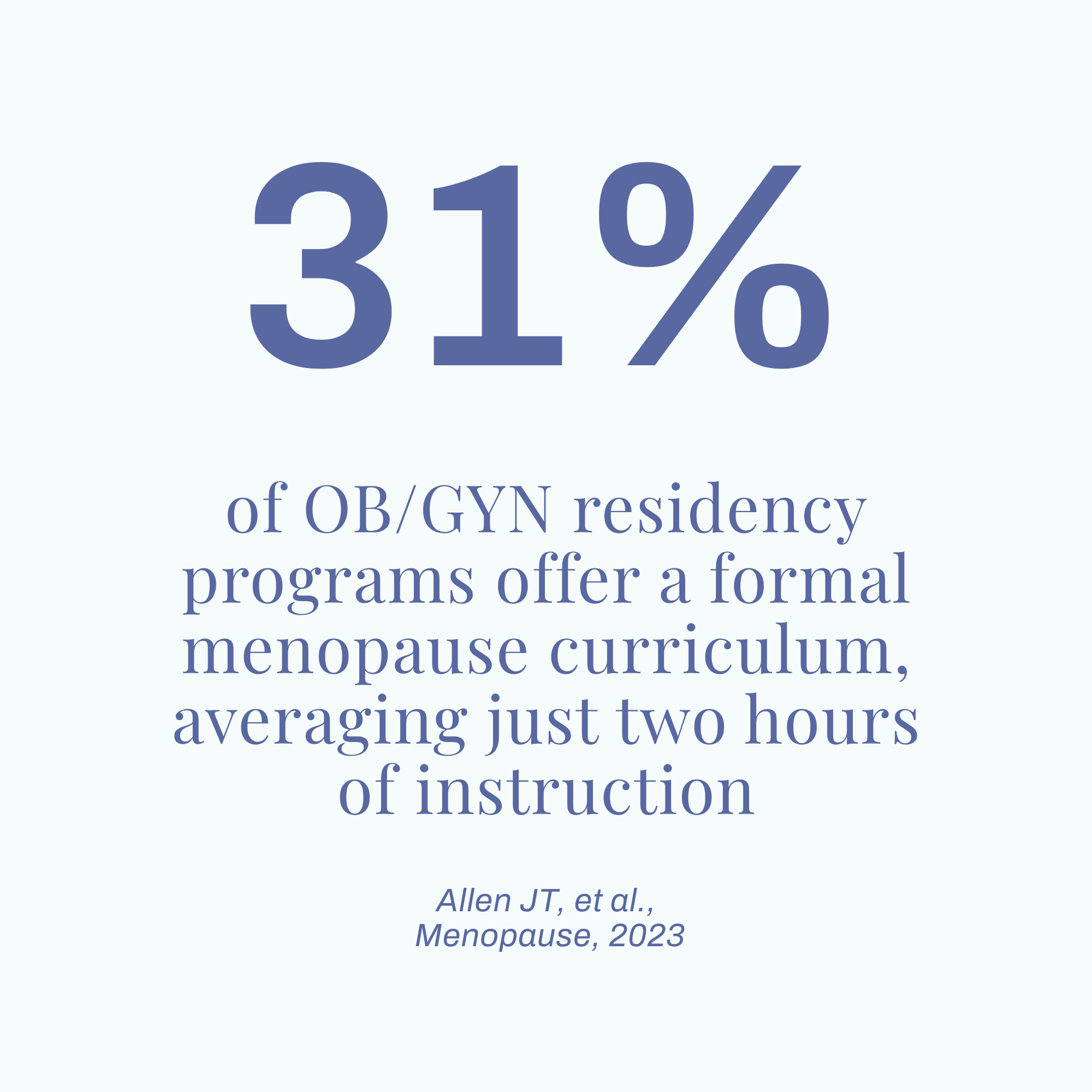
31% of OB/GYN residency programs offer a formal menopause curriculum, averaging just two hours of instruction
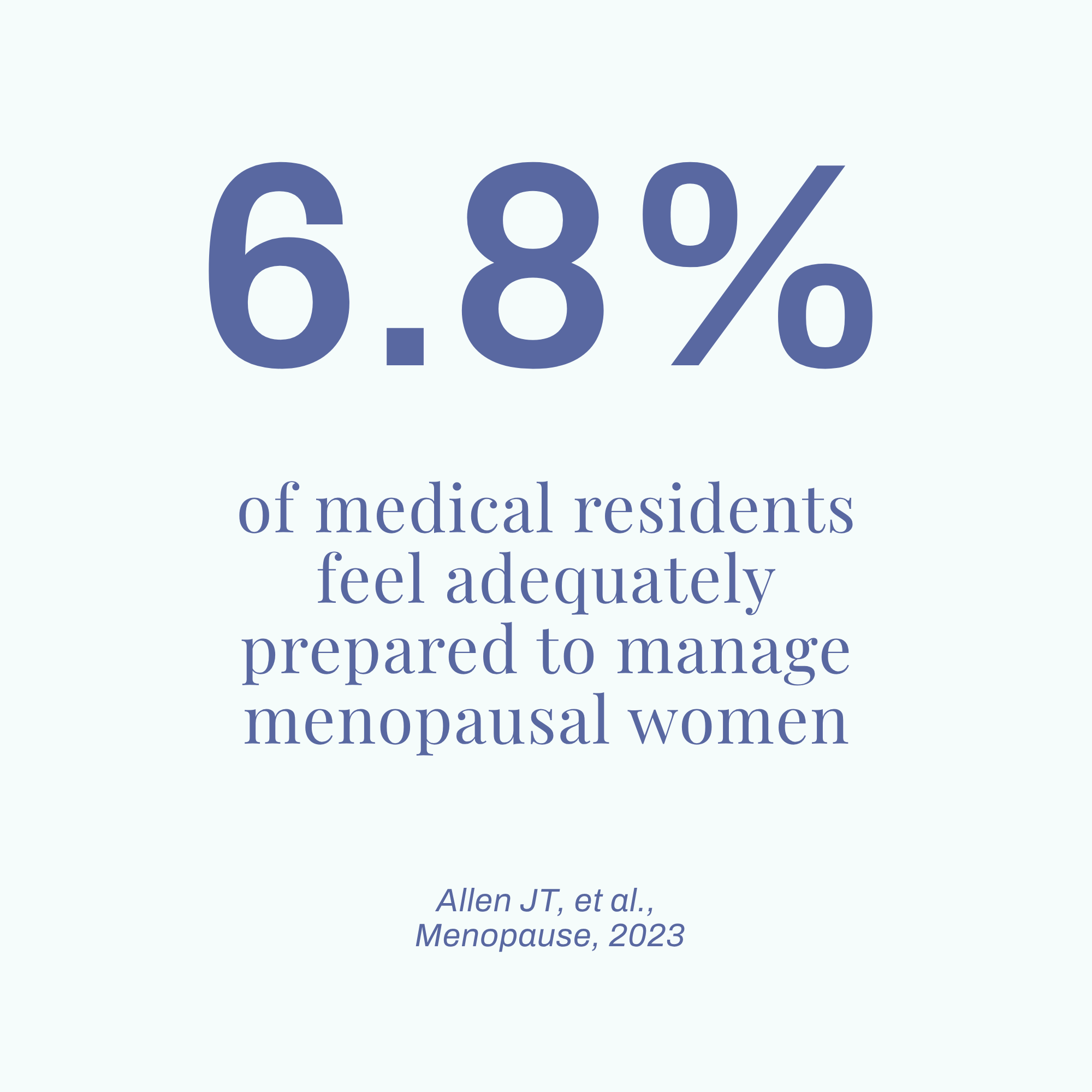
6.8% of medical residents feel adequately prepared to manage menopausal women
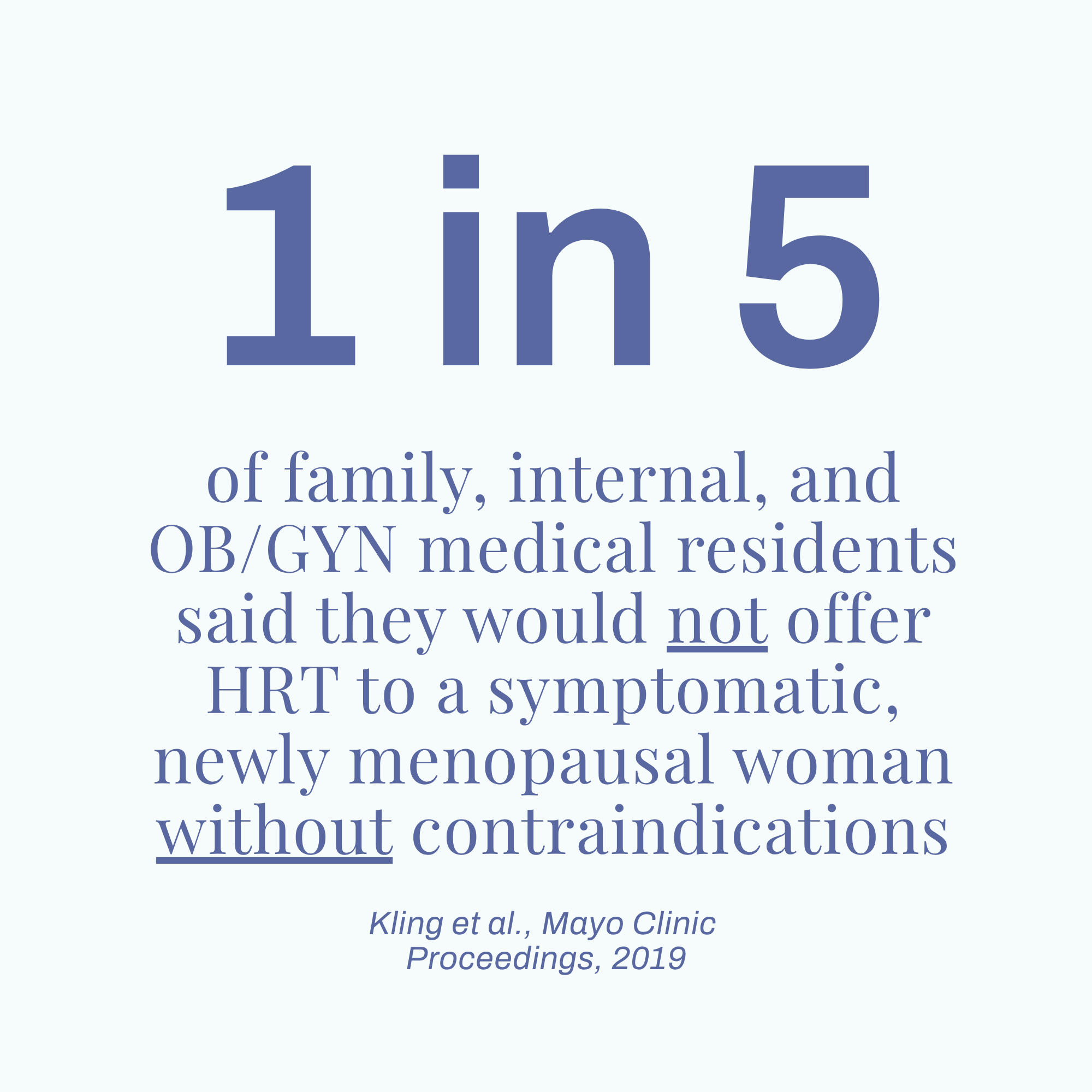
1 in 5 of family, internal, and OB/GYN medical residents said they would not offer HRT to a symptomatic, newly menopausal woman without contraindications
What Steps to Take
Finding quality menopause care should not be this hard. But the reality for now is that it is, and knowing what to look for gives you the best chance of getting to better care faster.
That is why we have created this resource for you.

Find providers from well-respected resources. Here are a few recommended starting points:
1
International Society for the Study of Women’s Sexual Health (ISSWSH)
Your local specialty/compounding pharmacy — Pharmacies that regularly fill hormone therapy prescriptions are often well-connected to experienced clinicians. Worth a call to gather more names.
Telehealth companies that specialize in perimenopause and menopause, such as MyAlloy or MidiHealth.
Trusted friends and family who have had positive experiences
Research clinicians of interest online and look for clues that they believe in shared decision-making.
2
The best clinician for this phase of your health is one who practices shared decision-making. That means they bring you options, explain the evidence, and build a plan with you, not for you. They also understand that perimenopause and menopause are diagnosed through symptoms, not a number on a lab result. If something feels off, a good provider takes that seriously.
Call the office of your top selects for further insights.
3
Reach out to the offices of the clinicians you are interested in. Ask them pointed questions based on your goals, your concerns, past negative experiences, etc. and ensure you feel this is good fit before you make an appointment. Don’t forget to check into how the billing structures work - every provider might operate differently.
Watch out for our top 10 red flags during appointments.
4
You are told you are too young to be in perimenopause. Every woman is different. While the average age of menopause in the US is 51, perimenopause can begin in a woman’s 30s.
Your clinician requires hormone lab work to show abnormal results before being willing to discuss HRT with you. Perimenopause and menopause are diagnosed through symptoms, not bloodwork. Estrogen and progesterone levels fluctuate significantly and are a snapshot in time, not the full picture.
Your clinician says your lab results are normal and therefore you are not in perimenopause. This is a sign the clinician is not trained in menopause care.
The clinician dismisses your symptoms as not bad enough. This is medical gaslighting. Find another provider.
You are struggling with sleep disruption or night sweats and are prescribed SSRIs without any discussion of hormonal options such as oral micronized progesterone. SSRIs play an important role in health for many women but are not always the right first line of treatment for menopause-related symptoms. You have the right to evaluate all of your options.
You ask about HRT and your clinician offers only birth control. Hormonal birth control and hormone replacement therapy are not the same. You deserve a full review of your options and a risk and benefit discussion.
You are only offered compounded cream hormones or pellets without a discussion that includes FDA-regulated estrogen and progesterone delivery options. Compounded hormones are not inherently better than FDA-approved products though for some women these can be the right choice, and pellets in particular carry risks that are not always disclosed.
You are offered vaginal laser therapy for vaginal dryness or irritation without any discussion of the genitourinary syndrome of menopause and local hormone therapy, which is one of the most effective, safe and well-studied treatments available.
You are counseled on the risks of taking HRT but not on the risks of not taking it. A good clinician presents the full picture and makes decisions with you, not for you. This applies to cancer survivors as well.
You are told that HRT causes cancer and the conversation ends there. This is not based on current evidence. You deserve a provider who will engage with you on the nuances and personalize your care.